WordPress Alternative 2026: Why Companies Are Switching to Framer
WordPress Alternative 2026: Why Companies Are Switching to Framer
In this article, I’ll show you why WordPress will become a structural bottleneck for mid-sized B2B companies in 2026 and why Framer is the technically superior alternative. You’ll learn what a professional website relaunch actually costs, how Framer and WordPress really differ, and how Webnity X, as a leading Framer agency in the DACH region, supports mid-sized companies through the transition.

Niklas Hass
Framer Expert & Founder Webnity X | June 2026
Framer Expert & Founder of Webnity X
June 2026
Insights
8 Minuten
Insights
The key points at a glance:
WordPress is not an optimization problem — it is an architecture problem.
Security vulnerabilities, slow load times, and maintenance costs are not fixable. They are systemic.Framer pages load faster and therefore rank better.
PageSpeed scores above 90 on mobile are standard with Framer. With WordPress, they are the exception.No maintenance effort, no plugin updates, no developer needed for text changes.
Framer just runs. Editors manage content themselves. IT tickets are a thing of the past.Website relaunch with Framer from €3,499, one-time.
Includes CMS, SEO optimization, and conversion design.Webnity X is an Official Framer Expert and the leading Framer agency in the DACH region.
35+ completed projects, all exclusively in Framer.
Table of Contents
Many mid-sized companies have been running their website on WordPress for years. The system works, the content is maintained, and a switch has never seriously been up for discussion. But in 2026 it is becoming increasingly clear that WordPress has structural limitations for professional B2B websites that cannot be overcome through optimization.
Security vulnerabilities are piling up, loading times are costing rankings, and monthly maintenance costs keep rising without the site getting any better. More and more mid-sized companies in Germany, Austria, and Switzerland are therefore drawing the same conclusion: they are relaunching their website and switching to Framer.
The WordPress problem: when the CMS becomes a cost trap
WordPress is the world's most widely used content management system. According to W3Techs, more than 43 percent of all websites worldwide run on WordPress. That market share is impressive, but it also explains the platform's biggest problem.
WordPress is open source, which means anyone can view the source code, including attackers. According to the Sucuri Website Threat Research Report, more than 90 percent of all infected websites come from the WordPress ecosystem. The most common entry point is outdated plugins.
A typical mid-sized WordPress project runs with 15 to 30 plugins. Each one is a potential security risk, and every update can make other plugins incompatible. Ignoring this risks a compromised website. Taking it seriously means paying monthly for external maintenance, regardless of whether anything on the site changes or not.
Performance: Why slow websites cost customers and rankings
Since 2021, Google's Core Web Vitals have been an official ranking factor. On mobile, WordPress sites achieve an average PageSpeed score of 40 to 60 out of 100, even after extensive optimization. According to Google Think with Google, 53 percent of users leave a site if it takes longer than three seconds to load.
This is not a problem that can be solved with a better caching plugin. WordPress renders pages server-side via PHP, loads unnecessary code, and is not technically designed for the requirements of 2026.
Maintenance costs: what WordPress really costs
The biggest hidden cost factor with WordPress is not hosting, but the ongoing costs for maintenance, developer hours, and unplanned interventions. For mid-sized companies, this means on average:
100 to 300 euros per month for external maintenance (updates, backups, monitoring)
500 to 2,000 euros for each major developer intervention
Unpredictable downtime costs in the event of a successful attack
Over three years, many companies pay more for maintaining their WordPress site than for the original build.
What is Framer and why is the platform growing so strongly?
Framer started in 2014 as a prototyping tool for designers and has developed since 2022 into the most serious alternative for professional websites. Today, more than 100,000 websites worldwide trust Framer, from fast-growing SaaS companies to international B2B brands.
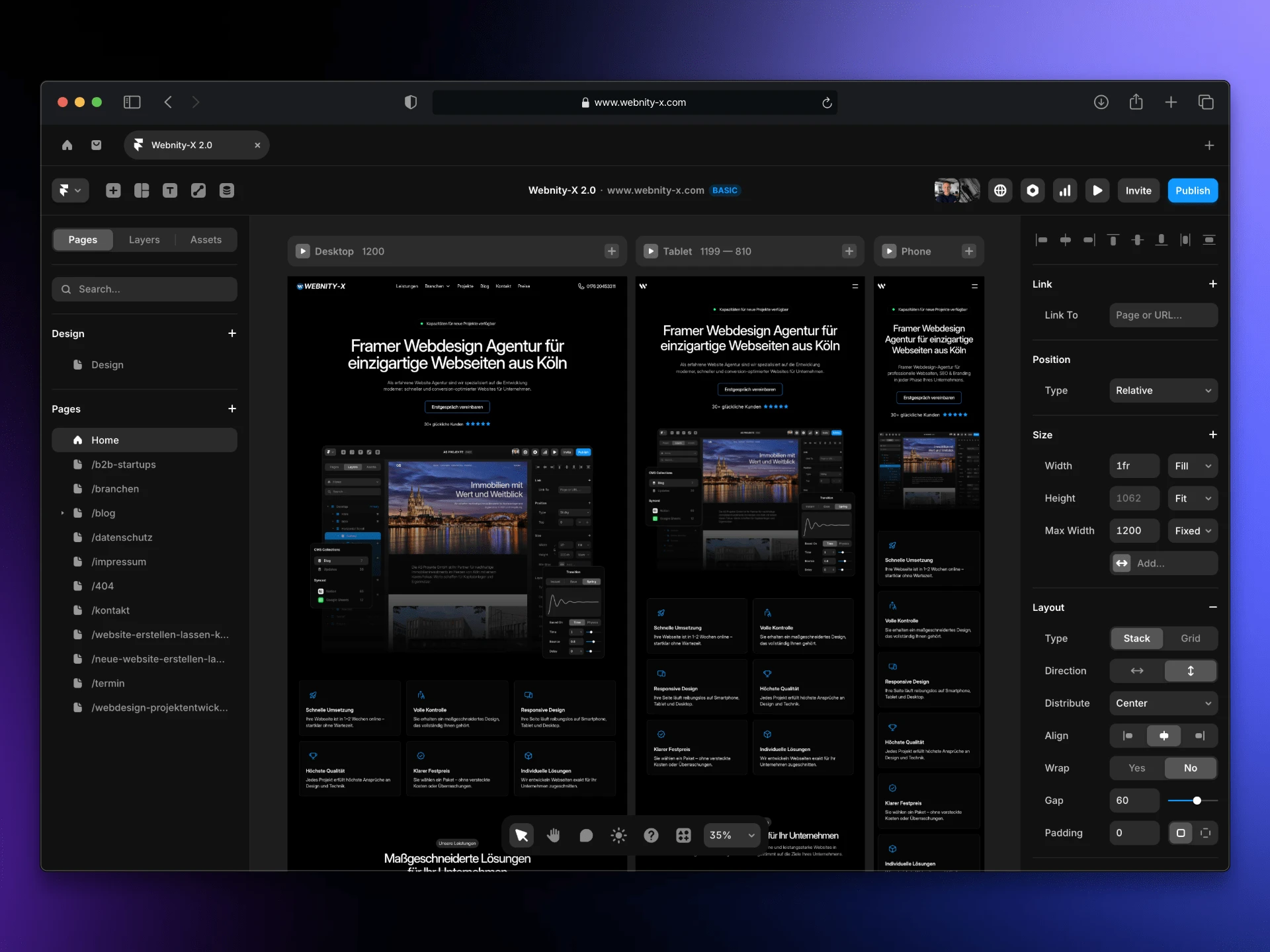
What fundamentally sets Framer apart from WordPress:
No server backend, no PHP. Framer delivers pages via a global CDN. The result is loading times that WordPress structurally cannot achieve.
Native CMS. Content is maintained through a clear interface, without plugin dependencies and without technical prior knowledge.
Animations and interactions natively. Scroll effects and hover animations are created directly in the editor, without custom development.
SEO by default. Clean HTML, correct heading structures, and automatic sitemaps are standard in Framer, not extra work.
A/B testing included. Natively available in the Pro plan, only via plugins in WordPress.
Framer is not the cheaper alternative to WordPress. It is the technically superior one.
Framer vs. WordPress: the direct comparison
Criterion | WordPress | Framer |
|---|---|---|
PageSpeed Mobile | Ø 40 to 60 out of 100 | Ø 88 to 98 out of 100 |
Security risk | High (plugins, PHP) | Minimal (no backend) |
Monthly maintenance | Required | Not required |
CMS maintenance | Complex, plugin-dependent | Intuitive, ready to use immediately |
Animations | Expensive custom development | Native in the editor |
SEO foundation | Manual via plugins | No plugins required |
A/B testing | Plugin-dependent | Native in the Pro plan |
Hosting | External hosting required | Included (global CDN) |
Learning curve for editors | High | Low |
Long-term costs | High and unpredictable | High and unpredictable |
Framer pricing: what a website relaunch really costs
Transparency is important to us, so here are the concrete numbers.
Framer hosting costs (annual billing)
Plan | Price per month | For whom |
|---|---|---|
Free | 0 euros | Non-commercial projects |
Basic | approx. 9 euros | Small personal sites |
Pro | approx. 28 euros | Professional B2B websites |
Scale | approx. 92 euros | High-traffic and enterprise |
Most mid-sized B2B websites run on the Pro plan for about 28 euros per month. That is less than many companies currently spend on WordPress hosting alone, not including maintenance. You can find all current prices directly on framer.com/pricing.
Development costs at Webnity X
Package | Price | Content |
|---|---|---|
Starter package | from 1,990 euros (one-time) | Landing page, modern design, SEO basics |
Business package | from 3,499 euros (one-time) | Multi-page website, CMS, SEO, conversion design |
Business + GEO | from 3,999 euros (one-time) | Like Business, plus AI search optimization |
For comparison: a comparable custom WordPress development at the same quality level typically costs between 15,000 and 30,000 euros, plus ongoing maintenance costs. You can find all packages on our pricing page.
What mid-sized companies gain from a website relaunch with Framer
A website relaunch is not purely an aesthetic decision, but a strategic one.
Better Google rankings through faster load times
Framer sites consistently achieve PageSpeed scores above 90 on mobile. For mid-sized companies whose customers make decisions in the five-figure range, that means more visibility, fewer bounces, and more qualified inquiries.
Manage content without developers
The Framer CMS makes it possible to maintain blog posts, references, job listings, and product pages through an interface that requires no technical onboarding. Your editorial team works independently, without IT tickets and without waiting times.
Design that builds trust
Scroll animations, interactive sections, and professional typography are part of Framer's standard workflow. The result is websites that feel modern and credible to demanding B2B customers.
No more maintenance costs
No patch management, no plugin updates, no security scans. Framer runs stably without the need for monthly interventions.
Webnity X: your Framer agency for website relaunch in the DACH region
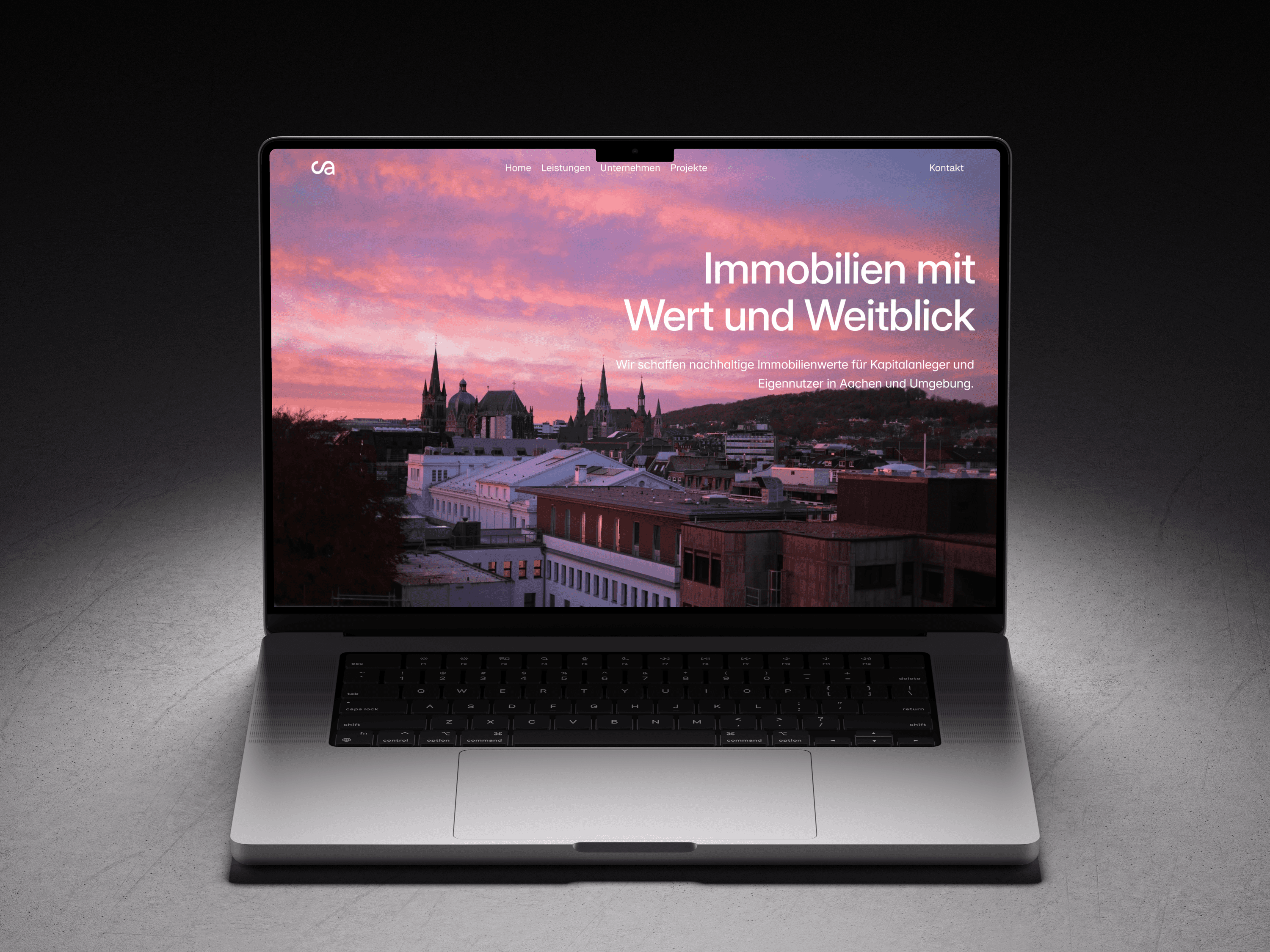
Webnity X is a web design and website relaunch agency specialized in Framer, based in Bergheim near Cologne. As an Official Framer Expert, verified in the official Framer Expert directory, we develop exclusively in Framer. No WordPress, no Webflow, no website builder system.
What this means for you: you are not working with a generalist agency that offers Framer as one of many options. You are working with a team that develops exclusively in Framer every day and has over 35 completed projects in Germany, Austria, Switzerland, and internationally.
As a leading Framer agency in the DACH region, we support mid-sized B2B companies, SaaS firms, and startups from the first strategy call through to successful go-live.
Frequently asked questions about switching from WordPress to Framer
What alternatives are there to WordPress?
The best-known alternatives to WordPress are Framer, Webflow, Squarespace, and Wix. For online shops, Shopify is its own category. For professional B2B websites, we recommend Framer because it is the only system that combines fast loading times, modern design, an intuitive CMS, and clean SEO structures without plugin dependencies.
Is WordPress still up to date?
WordPress is actively being developed and is not technically dead. For simple blogs or highly customized web applications, it can still make sense. For professional B2B websites, where performance, security, and maintenance effort matter, companies in 2026 are increasingly hitting structural limits that cannot be overcome through optimization.
Why are companies moving away from WordPress?
The most common reasons are: growing security gaps due to outdated plugins, poor PageSpeed scores despite extensive optimization, high monthly maintenance costs, and an interface that is difficult for editors without technical knowledge to use. Many companies find that they invest more in maintaining their WordPress site than in further developing it.
Is WordPress outdated in 2026?
The architecture of WordPress was built for a different time. The PHP-based server-side rendering, plugin dependencies, and the associated security risks no longer match the state of modern web development. For companies that need a fast, secure, and low-maintenance website, WordPress is no longer a recommended foundation in 2026.
What is easier to use than WordPress?
Framer is much easier to use for editors and companies without technical prior knowledge than WordPress. There is no complex backend, no plugin settings, and no dependencies that affect each other. Content is maintained through a clear interface that is easy to understand without training.
Will I lose my Google rankings when switching to Framer?
With a properly executed relaunch, correct 301 redirects, and preserved URL structure, short-term fluctuations are minimal. In the long run, you benefit from better performance and a stronger technical SEO foundation. Most of our clients rank better after the relaunch than before.
Can I migrate my WordPress content to Framer?
Yes. Texts, images, and structures are transferred and cleanly rebuilt in the Framer CMS, usually cleaner and more performant than before.
Can I edit the site myself after launch?
Yes. The Framer CMS is built so that editors without technical knowledge can maintain content independently. We train your team directly at go-live.
Is Framer suitable for multilingual websites as well?
Yes, Framer natively supports multiple languages. However, additional language versions beyond the free first locale are subject to a fee and can noticeably increase monthly hosting costs depending on the number of languages. Anyone who needs three or more language versions should take that into account when planning the budget. We have implemented B2B projects with up to four language versions and are happy to advise you on which setup makes sense for your company.
For whom is Framer not the right choice?
For online shops with thousands of product variants, we recommend Shopify. For highly complex web applications with their own database, custom development. For professional B2B websites, lead generation, and a modern market presence, Framer is the first choice in 2026. Conclusion: WordPress was the right choice for a long time. For 2026, it is no longer enough.
WordPress shaped the first era of the modern internet and was the right decision for many companies for years. However, the requirements for professional B2B websites have changed fundamentally. Companies that are still working with a slow, maintenance-intensive WordPress site today are losing potential customers every day to competitors who have already made this move.
Framer offers what WordPress structurally cannot deliver: speed, security, maintenance-free operation, and a level of design that resonates with demanding B2B customers.
Talk to us now, free of charge and without obligation.
Schedule a free initial consultation
Webnity X | Official Framer Expert | Bergheim near Cologne | webnity-x.com
Many mid-sized companies have been running their website on WordPress for years. The system works, the content is maintained, and a switch has never seriously been up for discussion. But in 2026 it is becoming increasingly clear that WordPress has structural limitations for professional B2B websites that cannot be overcome through optimization.
Security vulnerabilities are piling up, loading times are costing rankings, and monthly maintenance costs keep rising without the site getting any better. More and more mid-sized companies in Germany, Austria, and Switzerland are therefore drawing the same conclusion: they are relaunching their website and switching to Framer.
The WordPress problem: when the CMS becomes a cost trap
WordPress is the world's most widely used content management system. According to W3Techs, more than 43 percent of all websites worldwide run on WordPress. That market share is impressive, but it also explains the platform's biggest problem.
WordPress is open source, which means anyone can view the source code, including attackers. According to the Sucuri Website Threat Research Report, more than 90 percent of all infected websites come from the WordPress ecosystem. The most common entry point is outdated plugins.
A typical mid-sized WordPress project runs with 15 to 30 plugins. Each one is a potential security risk, and every update can make other plugins incompatible. Ignoring this risks a compromised website. Taking it seriously means paying monthly for external maintenance, regardless of whether anything on the site changes or not.
Performance: Why slow websites cost customers and rankings
Since 2021, Google's Core Web Vitals have been an official ranking factor. On mobile, WordPress sites achieve an average PageSpeed score of 40 to 60 out of 100, even after extensive optimization. According to Google Think with Google, 53 percent of users leave a site if it takes longer than three seconds to load.
This is not a problem that can be solved with a better caching plugin. WordPress renders pages server-side via PHP, loads unnecessary code, and is not technically designed for the requirements of 2026.
Maintenance costs: what WordPress really costs
The biggest hidden cost factor with WordPress is not hosting, but the ongoing costs for maintenance, developer hours, and unplanned interventions. For mid-sized companies, this means on average:
100 to 300 euros per month for external maintenance (updates, backups, monitoring)
500 to 2,000 euros for each major developer intervention
Unpredictable downtime costs in the event of a successful attack
Over three years, many companies pay more for maintaining their WordPress site than for the original build.
What is Framer and why is the platform growing so strongly?
Framer started in 2014 as a prototyping tool for designers and has developed since 2022 into the most serious alternative for professional websites. Today, more than 100,000 websites worldwide trust Framer, from fast-growing SaaS companies to international B2B brands.
What fundamentally sets Framer apart from WordPress:
No server backend, no PHP. Framer delivers pages via a global CDN. The result is loading times that WordPress structurally cannot achieve.
Native CMS. Content is maintained through a clear interface, without plugin dependencies and without technical prior knowledge.
Animations and interactions natively. Scroll effects and hover animations are created directly in the editor, without custom development.
SEO by default. Clean HTML, correct heading structures, and automatic sitemaps are standard in Framer, not extra work.
A/B testing included. Natively available in the Pro plan, only via plugins in WordPress.
Framer is not the cheaper alternative to WordPress. It is the technically superior one.
Framer vs. WordPress: the direct comparison
Criterion | WordPress | Framer |
|---|---|---|
PageSpeed Mobile | Ø 40 to 60 out of 100 | Ø 88 to 98 out of 100 |
Security risk | High (plugins, PHP) | Minimal (no backend) |
Monthly maintenance | Required | Not required |
CMS maintenance | Complex, plugin-dependent | Intuitive, ready to use immediately |
Animations | Expensive custom development | Native in the editor |
SEO foundation | Manual via plugins | No plugins required |
A/B testing | Plugin-dependent | Native in the Pro plan |
Hosting | External hosting required | Included (global CDN) |
Learning curve for editors | High | Low |
Long-term costs | High and unpredictable | High and unpredictable |
Framer pricing: what a website relaunch really costs
Transparency is important to us, so here are the concrete numbers.
Framer hosting costs (annual billing)
Plan | Price per month | For whom |
|---|---|---|
Free | 0 euros | Non-commercial projects |
Basic | approx. 9 euros | Small personal sites |
Pro | approx. 28 euros | Professional B2B websites |
Scale | approx. 92 euros | High-traffic and enterprise |
Most mid-sized B2B websites run on the Pro plan for about 28 euros per month. That is less than many companies currently spend on WordPress hosting alone, not including maintenance. You can find all current prices directly on framer.com/pricing.
Development costs at Webnity X
Package | Price | Content |
|---|---|---|
Starter package | from 1,990 euros (one-time) | Landing page, modern design, SEO basics |
Business package | from 3,499 euros (one-time) | Multi-page website, CMS, SEO, conversion design |
Business + GEO | from 3,999 euros (one-time) | Like Business, plus AI search optimization |
For comparison: a comparable custom WordPress development at the same quality level typically costs between 15,000 and 30,000 euros, plus ongoing maintenance costs. You can find all packages on our pricing page.
What mid-sized companies gain from a website relaunch with Framer
A website relaunch is not purely an aesthetic decision, but a strategic one.
Better Google rankings through faster load times
Framer sites consistently achieve PageSpeed scores above 90 on mobile. For mid-sized companies whose customers make decisions in the five-figure range, that means more visibility, fewer bounces, and more qualified inquiries.
Manage content without developers
The Framer CMS makes it possible to maintain blog posts, references, job listings, and product pages through an interface that requires no technical onboarding. Your editorial team works independently, without IT tickets and without waiting times.
Design that builds trust
Scroll animations, interactive sections, and professional typography are part of Framer's standard workflow. The result is websites that feel modern and credible to demanding B2B customers.
No more maintenance costs
No patch management, no plugin updates, no security scans. Framer runs stably without the need for monthly interventions.
Webnity X: your Framer agency for website relaunch in the DACH region
Webnity X is a web design and website relaunch agency specialized in Framer, based in Bergheim near Cologne. As an Official Framer Expert, verified in the official Framer Expert directory, we develop exclusively in Framer. No WordPress, no Webflow, no website builder system.
What this means for you: you are not working with a generalist agency that offers Framer as one of many options. You are working with a team that develops exclusively in Framer every day and has over 35 completed projects in Germany, Austria, Switzerland, and internationally.
As a leading Framer agency in the DACH region, we support mid-sized B2B companies, SaaS firms, and startups from the first strategy call through to successful go-live.
Frequently asked questions about switching from WordPress to Framer
What alternatives are there to WordPress?
The best-known alternatives to WordPress are Framer, Webflow, Squarespace, and Wix. For online shops, Shopify is its own category. For professional B2B websites, we recommend Framer because it is the only system that combines fast loading times, modern design, an intuitive CMS, and clean SEO structures without plugin dependencies.
Is WordPress still up to date?
WordPress is actively being developed and is not technically dead. For simple blogs or highly customized web applications, it can still make sense. For professional B2B websites, where performance, security, and maintenance effort matter, companies in 2026 are increasingly hitting structural limits that cannot be overcome through optimization.
Why are companies moving away from WordPress?
The most common reasons are: growing security gaps due to outdated plugins, poor PageSpeed scores despite extensive optimization, high monthly maintenance costs, and an interface that is difficult for editors without technical knowledge to use. Many companies find that they invest more in maintaining their WordPress site than in further developing it.
Is WordPress outdated in 2026?
The architecture of WordPress was built for a different time. The PHP-based server-side rendering, plugin dependencies, and the associated security risks no longer match the state of modern web development. For companies that need a fast, secure, and low-maintenance website, WordPress is no longer a recommended foundation in 2026.
What is easier to use than WordPress?
Framer is much easier to use for editors and companies without technical prior knowledge than WordPress. There is no complex backend, no plugin settings, and no dependencies that affect each other. Content is maintained through a clear interface that is easy to understand without training.
Will I lose my Google rankings when switching to Framer?
With a properly executed relaunch, correct 301 redirects, and preserved URL structure, short-term fluctuations are minimal. In the long run, you benefit from better performance and a stronger technical SEO foundation. Most of our clients rank better after the relaunch than before.
Can I migrate my WordPress content to Framer?
Yes. Texts, images, and structures are transferred and cleanly rebuilt in the Framer CMS, usually cleaner and more performant than before.
Can I edit the site myself after launch?
Yes. The Framer CMS is built so that editors without technical knowledge can maintain content independently. We train your team directly at go-live.
Is Framer suitable for multilingual websites as well?
Yes, Framer natively supports multiple languages. However, additional language versions beyond the free first locale are subject to a fee and can noticeably increase monthly hosting costs depending on the number of languages. Anyone who needs three or more language versions should take that into account when planning the budget. We have implemented B2B projects with up to four language versions and are happy to advise you on which setup makes sense for your company.
For whom is Framer not the right choice?
For online shops with thousands of product variants, we recommend Shopify. For highly complex web applications with their own database, custom development. For professional B2B websites, lead generation, and a modern market presence, Framer is the first choice in 2026. Conclusion: WordPress was the right choice for a long time. For 2026, it is no longer enough.
WordPress shaped the first era of the modern internet and was the right decision for many companies for years. However, the requirements for professional B2B websites have changed fundamentally. Companies that are still working with a slow, maintenance-intensive WordPress site today are losing potential customers every day to competitors who have already made this move.
Framer offers what WordPress structurally cannot deliver: speed, security, maintenance-free operation, and a level of design that resonates with demanding B2B customers.
Talk to us now, free of charge and without obligation.
Schedule a free initial consultation
Webnity X | Official Framer Expert | Bergheim near Cologne | webnity-x.com
Ready to start your premium Framer project with Webnity-X?
Our Framer experts will provide you with comprehensive consulting for your project, transforming your website into a genuine lead-generation powerhouse.





Rated 5.0 from over 25 reviews
Ready to start your premium Framer project with Webnity-X?
Our Framer experts will provide you with comprehensive consulting for your project, transforming your website into a genuine lead-generation powerhouse.
Rated 5.0 from over 25 reviews
Ready to start your premium Framer project with Webnity-X?
Our Framer experts will provide you with comprehensive consulting for your project, transforming your website into a genuine lead-generation powerhouse.
Rated 5.0 from over 25 reviews